Writing
Exercise
Week 1
My Best Friend
Prompt: Write a story in the first person with the title "My Best Friend". Avoid exposition.
We bumped into each other as I rushed my way through the stilted hallway. I was 5 minutes late to class, and my brain did not even register your presence until it made contact with my unassuming shoulder. You steadied me. And you could’ve just walked away. But maybe the world halted its orbit for us—just for a minute—and I took your tall figure in. You bared your full height awkwardly, limbs too long that didn’t know where to go. I wondered whether you recognised me before I did. I wondered whether you bumped into me purposefully. I wondered whether you had been waiting behind the pillar on the far side of the long room, just waiting for me to scamper down with negative five minutes to spare. Of course I knew that the Earth didn’t just stop. Those negative five minutes continued their constant roll, to six, to seven, and maybe it had turned past ten without checking with me first. Your arm had fallen back to the side of your body, and in your grimace I knew that you were pushing down the urge to fall back into old patterns. To throw in a remark of “Stop catastrophising. Come back to the present.” I saw your mouth moving in my mind’s eye. And dashed past you to a full class.

Week 3
11.12 p.m.
Prompt: Craft a family homage -- a celebration or remembrance of a family member. Capture the essence of their character.
It was 11.12 p.m when your mother received the call, though it said 11.16 on the clock by the TV. If it had been the night before your mother would've told you on 03.12 at dawn, with the four hours different that separated you more than the ocean splayed far. Your grandfather died, your mother relayed the muffled voice to you; it had been quick. The night before he picked you up at the airport along with some ten other family members. You had dinner together, a hearty dinner where you had your first glass of wine. The most noble thing he did was to wait for you before he decided to die. You got ready to brace the stage: Change out of your satin night dress into a pair of sweatpants and a university hoodie from the dirty clothes pile. Do not wipe away sleep from your face; people misconstrue them as appropriately placed grief all the time. You savoured the hangover from the single glass of wine and wondered whether it might be your grandfather knocking at your head wanting to be let in. Mother would be waiting for you in the driveway, the sedan’s engine roaring to announce the death to whoever in this quiet neighbourhood would listen. When you walked out of the house, you noticed the dahlia flower on the pavement bloomed pink.
.jpg)
Week 2
Some Summer Break
Prompt: Write about a place that transformed you in some way. Focus on the emotions.
The nights of the first eighteen years of my life were spent on the bottom bunk of a pull out bed. The bottom bunk has always been firmer than its sibling. The surface stays warm even after a whole day without anything in contact with it. When I think back, the whole room might have been very warm all day. We never opened the windows, my sister and I. There was no reason to, for it opened up to the back of our house, overlooking the colourful clothes strewn in a pile that did not fit into our wardrobe. When I got home from school, my sister would already be curled up on the top bunk, and I would pull out the bottom bunk to join her. We would stay on that position until our parents arrived home from work, where we would press ourselves against each other instead in reminder of the familial ties shared between us. At night, I never used blankets—I would need to wait only until midnight or several moments before, where my sister has warmed up her body enough and in her slumber would kick her blankets until it rolled down in a heavy ball. In my slumber I would unravel it and have it cover my bare toes. When I visited home again on my summer break the bunk bed was cold. Mum told me that they just leave it out instead of pushing it in every morning, because the cats would sleep there—they would jump off just before sunrise. I couldn’t bring myself to sleep on the bottom bunk anymore.
.jpeg)
In-Class Exercise
Week 1
Role:
Camera, Editor, Colourist, Sound
A scene with a flashback in 12 shots, where the flashback informs the main story.
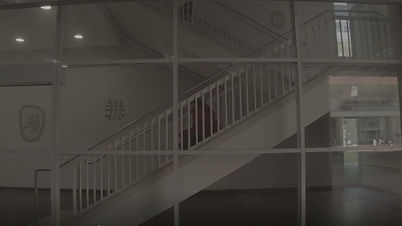
In this in-class exercise, we were prompted to create a scene with a flashback in 12 different shots. I found that the hardest part for me was navigating how to visually convey a flashback scene in an effective way.
As we mostly improvised the shots and story, I struggled with piecing together the puzzle into a coherent story. I ended up leaning into a more surreal/daydream sequence than a rigid flashback scene. While it does not exactly fit the prompt, it factored in my brainstorming process for the Assessment 1 (Digitale) project, although I eventually did the photo essay instead.

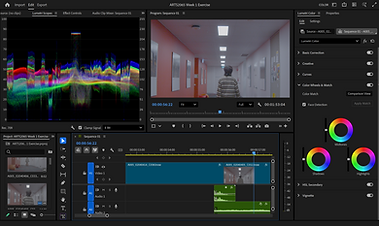
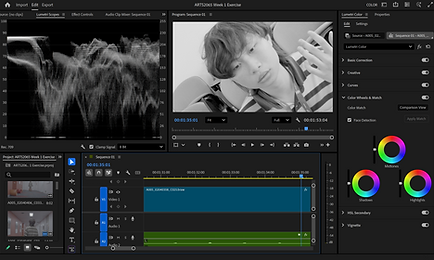
While experimenting with colour grading, I liked the effect of the colour-monochrome cut in showing a change not just in space but time, and decided to utilise that for this film.
I sourced music and sound effects online for this exercise, and I focused on using sound effects to contrast the bouncy piano music in creating the atmosphere and delivering the main narrative climax that disorients the world.
Deep Dive
_edited.png)

_edited.png)


_edited.png)
Exegesis
Digitale
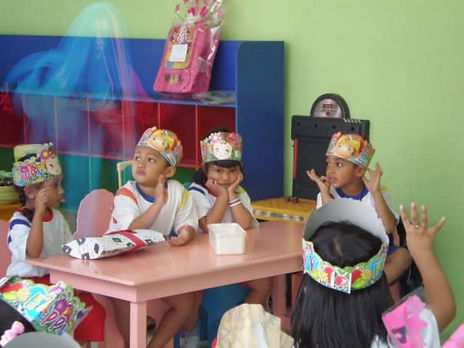
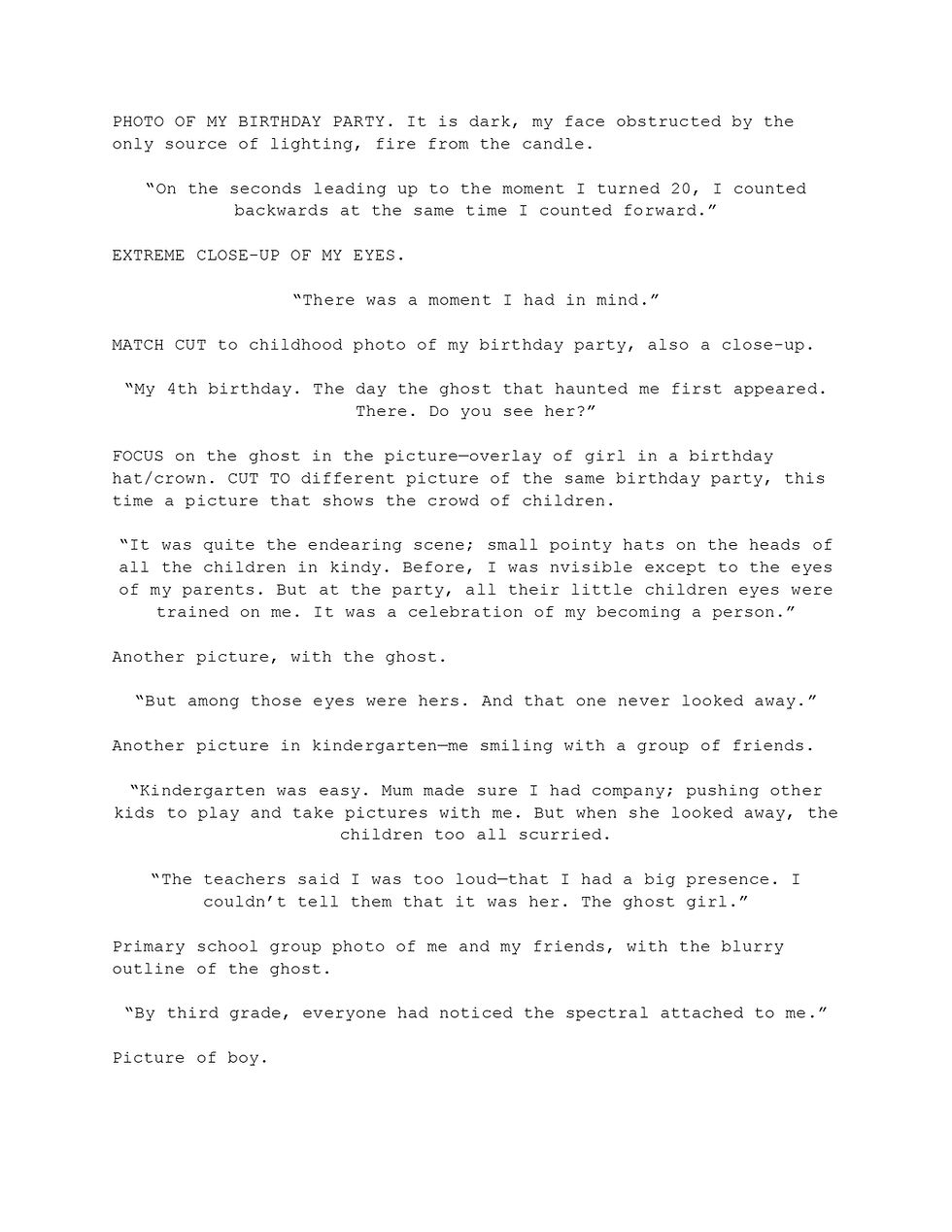
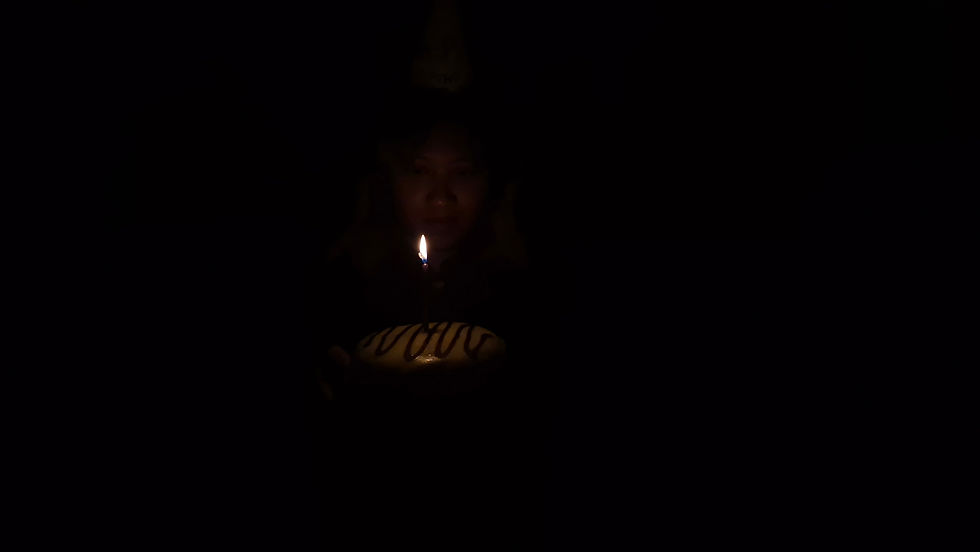
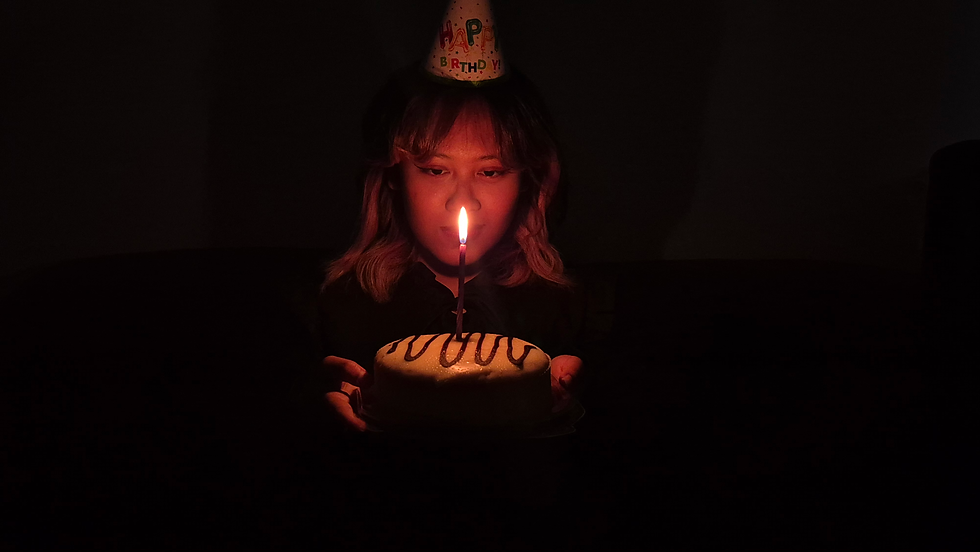
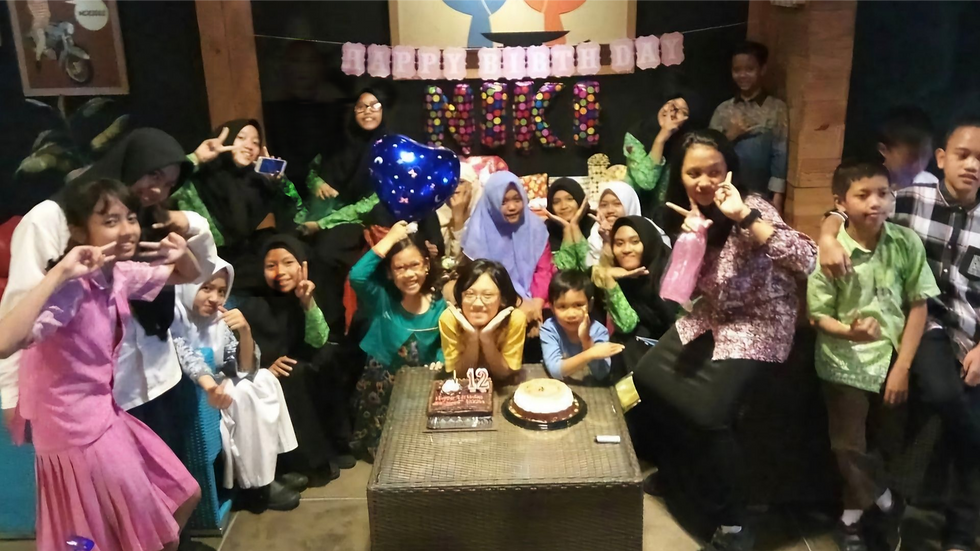
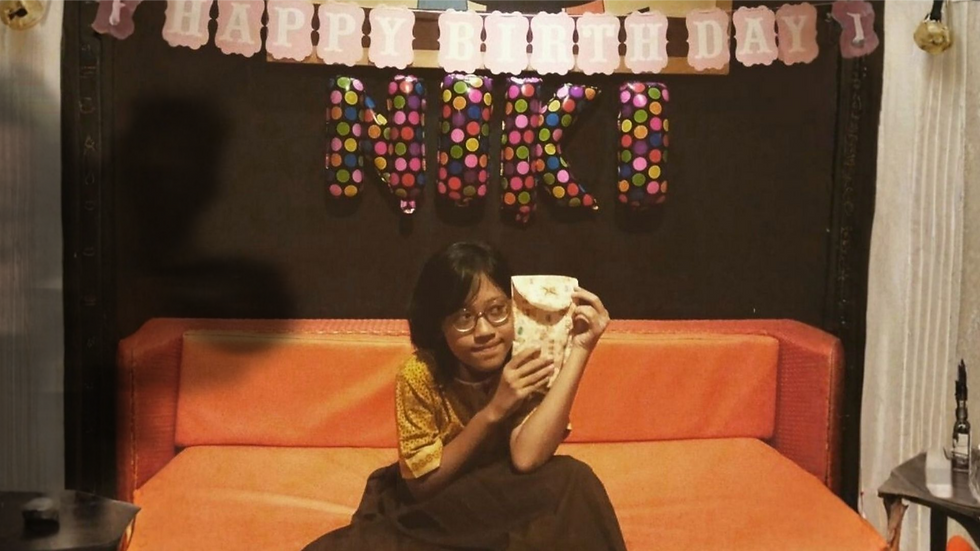
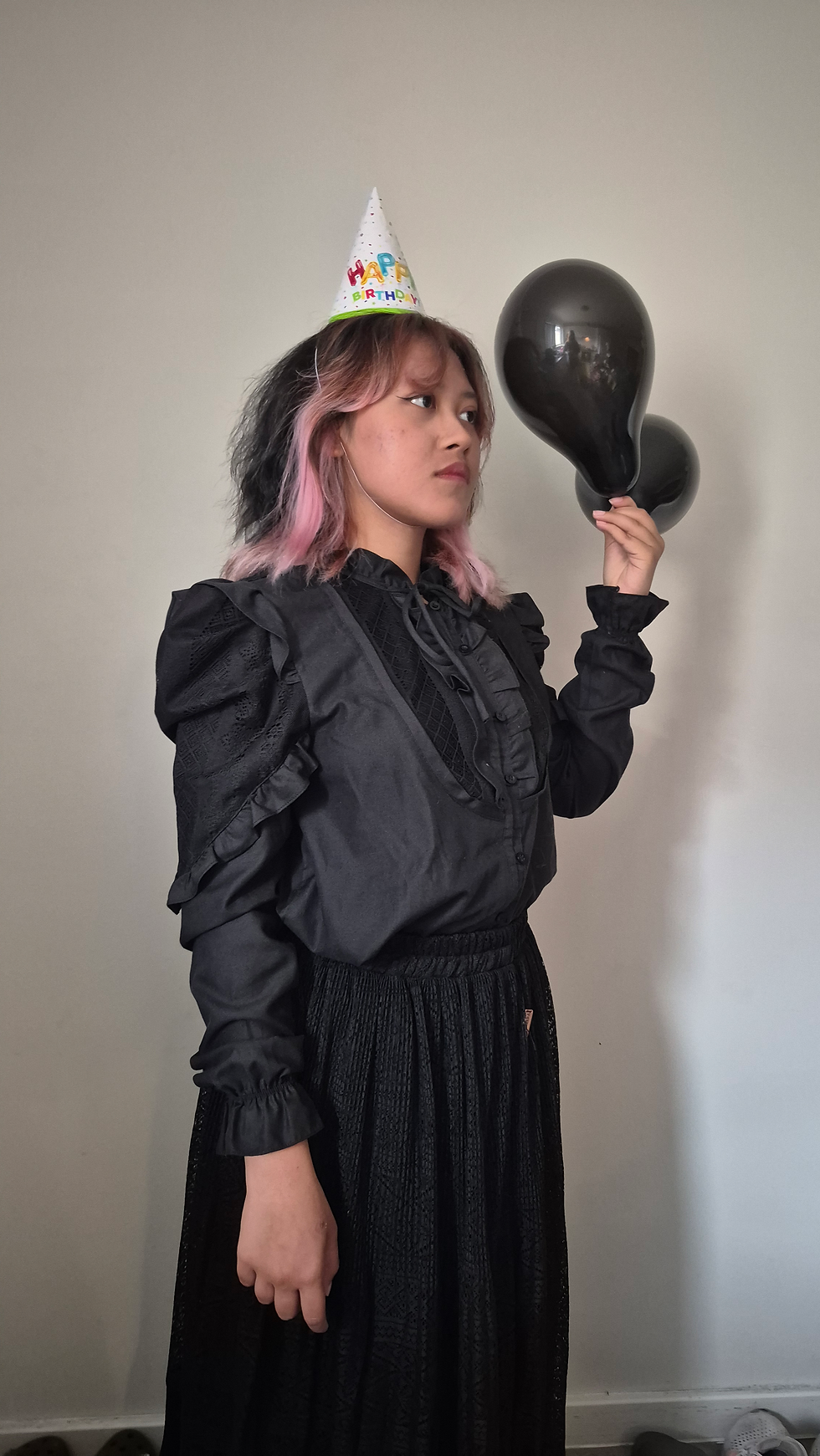
When I decided on this concept for my digitale assessment, my therapist asked me, “Are you sure you’ll be alright?” I laughed her off, but she was right to ask. The theme raised in the film “HAUNTED” is deeply personal, and rooted in an ugly core belief I hold that my lifelong inability to make friends is because something is inherently wrong with me. When I was going through childhood photos to brainstorm ideas for the digitale, I was presented with so many pictures of myself surrounded by people. I couldn’t reconcile the discrepancy between my belief that I was ostracised and the captured memories that say otherwise. If I could delude myself into thinking even for 3 minutes that there is some otherworldly thing that was the actual reason why I spooked people away, I would. But there isn’t. So in this film, I took on the role of being that ghoul myself. This film is inspired by the time travel model of films such as A Ghost Story (2017) and Interstellar (2014): a looped time travel story where our actions now are affected by what happened in our past, but the past only happened that way because of the time travel. In this story, perhaps this causal relationship is subverted because the “ghost” is me trying to make sense of my loneliness, and the sequence of events will not change regardless of its existence. I try to hint at this in the sequence where I alter myself after starting college, by retracing my birthdays without the ghost apparitions, therefore showing that the haunting is never the true catalyst of the change. When I first pitched this story, I was adamant about a quiet sound design: when the bustling party pictures tell one story, the tranquil would bring forth the understory of chronic loneliness. However, I was always a musical child, and that singular thing I’m good at gave me something to fight for when I couldn’t fight for friends. This context gave me an opening to bring in the music narratively. While I couldn’t get access to a piano because the idea came to me at the last minute, the piano piece played in the film is played by my younger sister, and it was one of the first pieces I taught her. The varying resolutions of my childhood photos also concern me, but I took pointers from the style of true crime documentaries by leaning into that graininess instead of pushing to enhance their resolutions. My friend Airi Tago kindly helped me take the additional present-day party photos and ghost assets. In hindsight, I wouldn’t be so sure in answering my therapist’s question. But even as I feel bad for my younger self all over again, I’m also sending a clear message to her. Even when the ghost doesn’t disappear, you are good enough for people not to be deterred. Above anything else, I hope that this takeaway comes through.
Production Process
Brainstorming

Moodboard


Test "Shot"
Script











Final Project: Unlocked
(스마트폰을 떨어뜨렸을 뿐인데)

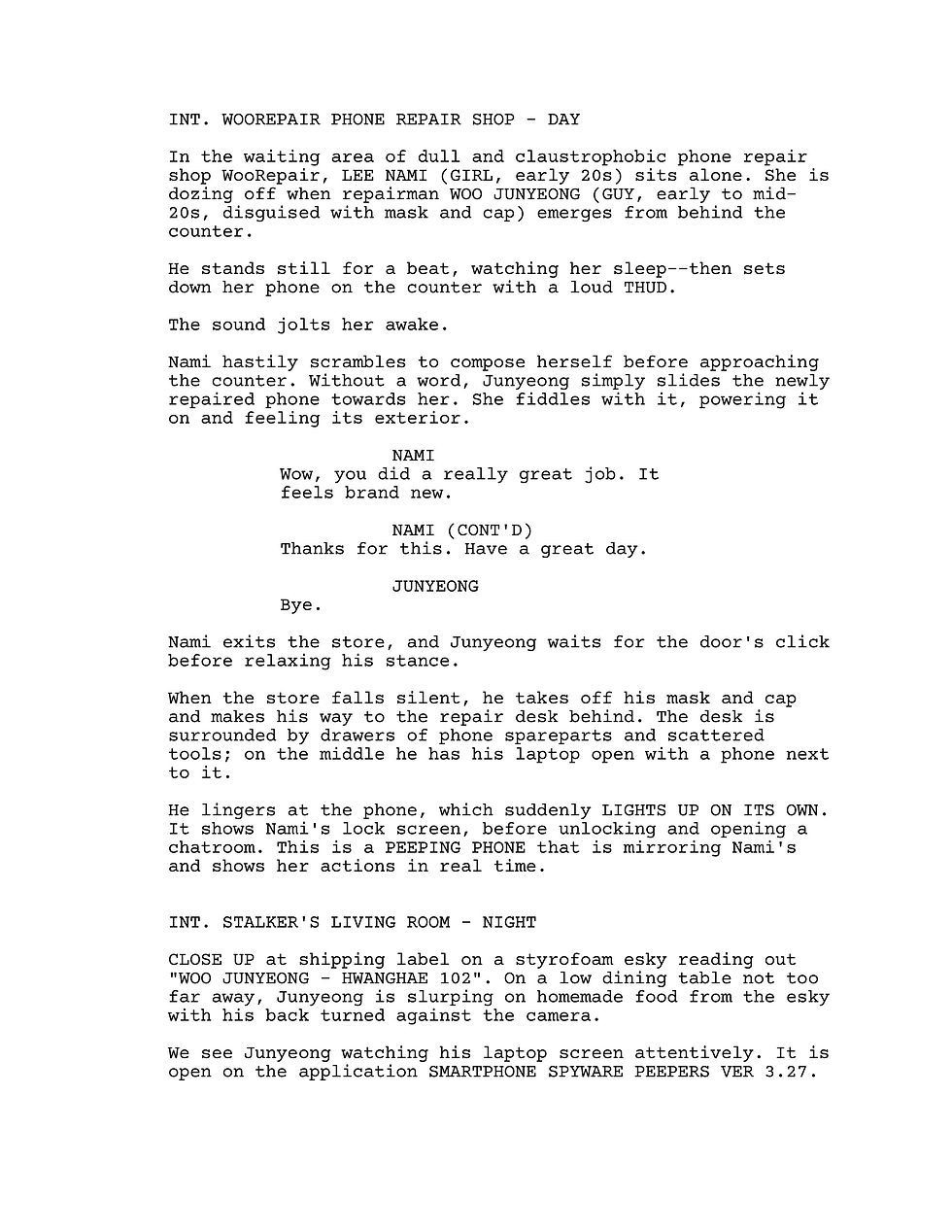
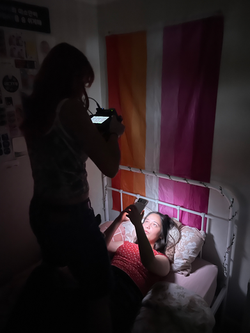
Unlocked (2023, dir. Kim Tae-Joon) depicts phone stalking as a reminder of how deeply inseparable our lives have become from our smartphones and the vulnerable state that it leaves us in. Our five-minute remake begins with the same unsettling premise that makes the original film resonate across languages and national borders: the events of the film could happen to all of us. We approached the casting of the female lead with the mindset of being open to beginners and non-actors, because it reflects the “could happen to anyone” quality of Unlocked. Our lead, Tara Mitrovic, had previously acted only in a short commercial, and we kept direction minimal—especially in scenes shot through the phone-camera POV. Her performance was contrasted with the stalker, portrayed by Kirato Hope, who already has an expansive portfolio of short and student film credits. The result of this dynamic complements the film’s terror well, with Kirato’s measured acting rendered spine-chilling against Tara’s portrayal that we could easily relate to. As producer and scriptwriter of the project, I was very intentional that the changes I implement in the text observe the film’s cultural cues and adapt it to reflect this Australian context. As we go from page to screen, our approach to mise-en-scène becomes shaped by the realities of contemporary Sydney. We replaced KakaoTalk (South Korea’s dominant messaging platform) from the original with the default phone messenger more commonly used across Australia. Other minor differences from the original film all further reflect this translation attempt, including the depiction of Sydney’s public transport, as well as differences in character names and set design. Some of these changes came to be organically from production constraints. For the office sequence, we filmed in a functioning workplace, which limited our ability to recreate the original’s casual environment. While Nami’s office in the film is depicted as a relaxed type of environment, we decided to lean more into the rigid working environment that the set allowed us to do. Conceptually, this framing showed instead a responsive and fitting approach to the larger setting, with Sydney CBD popular for its white-collar work culture. Our most technically ambitious shot is the overnight dolly shot of Nami’s phone being stalked. To do the dolly shot, we used a combination of practical effects and VFX. Two people operated the camera, with DoP pushing the camera while the assistant adjusted the zoom lens to synchronise with the dolly in. Meanwhile, I operate lighting by gradually opening blinds and modulating the lights on cue. The struggle in getting this shot was to coordinate all the elements to work smoothly together, especially considering the phone screen VFX that has to be applied later in post-production. Although challenging, this sequence became the stylistic anchor of the film that highlights the subsequent ambition in shot styles and angles. Taken together, these decisions ensure the 5-minute runtime effectively reframes Unlocked through the lens of our lives in a way that packs the same horror as its original.
Production Details
& Process
Production Crew
Cast Members
Niki Almira
Role: Writer, Producer, Gaffer, Assistant Director, VFX
Ut In (Jessica) Ho
Role: Director, Location Scout, VFX
Audrey Atip
Role: Director of Photography, Editor, VFX
Kristen Mellos
Role: Sound Designer, Soundtrack Composer, Art Director
Tara Mitrovic
as Nami Lee
Kirato Hope
as The Stalker
Extras
Faizah Azka as Coworker #1
Fadya Salsabila as Coworker #2